Systems Biology for Energy and the Environment
The Genomic Science program pursues fundamental research to understand, predict, manipulate, and design plant and microbial systems for innovations in renewable energy, insights into environmental processes, and biotechnological breakthroughs supporting the U.S. bioeconomy.
News & Funding

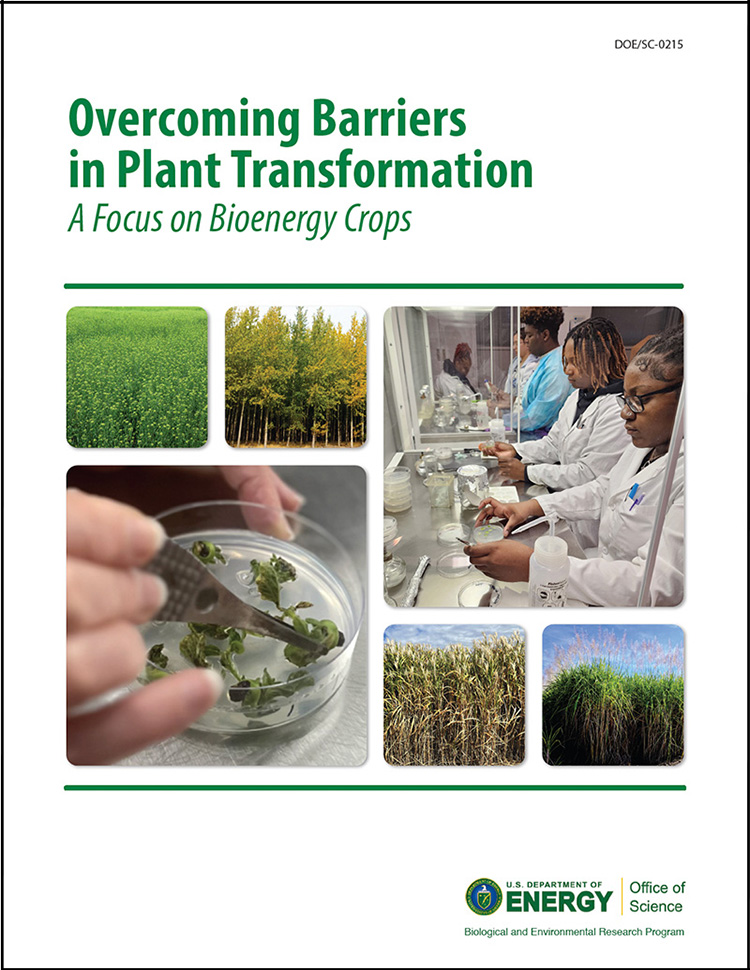
New Report: Overcoming Barriers in Plant Transformation: A Focus on Bioenergy Crops
Apr 11, 2024
New BER report on transformation and editing needs and barriers focused on bioenergy crops.
View more
DOE Accepting Applications: Undergraduate Internships
Mar 18, 2024
Submit SULI and CCI applications by 5:00 p.m. ET on Wednesday, May 22, 2024.
View more
FUNDING: RENEW and FAIR
Mar 12, 2024
DOE seeks applications for Reaching a New Energy Sciences Workforce (RENEW) and Funding for Accelerated, Inclusive Research (FAIR).
View more
FUNDING: DOE SCGSR Program 2024 Solicitation 1 Cycle
Feb 7, 2024
Applications for DOE's Office of Science Graduate Student Research (SCGSR) program 2024 Solicitation 1 cycle due Wednesday, May 1, 2024, at 5pm ET.
View more
Executive Summary: Overcoming Barriers in Plant Transformation: A Focus on Bioenergy Crops
Dec 20, 2023
Report of a workshop to define transformation and editing needs and barriers focused on bioenergy crops
View more
FUNDING: Early Career Research Program
Dec 19, 2023
DOE seeks applications for the Early Career Research Program. Pre-applications due January 30th.
View more
FUNDING: Established Program to Stimulate Competitive Research (EPSCoR)
Dec 11, 2023
Pre-applications due Wednesday, January 17, 2024 by 5:00 pm ET.
View more
Bioenergy
Providing the foundational genomics-based knowledge needed to produce and deconstruct renewable plant biomass and convert it to sustainable fuels, chemicals, and other bioproducts.
Biosystems Design
Accelerating the ability to securely design, build, and control plants and microbes for beneficial purposes such as clean energy, biomaterials, and carbon sequestration.
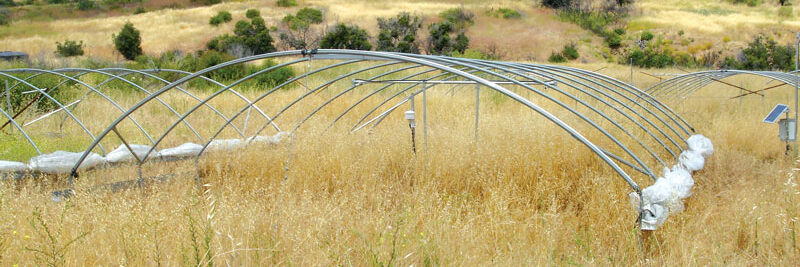
Environmental Microbiome
Developing a process-level understanding of how plant and soil microbial communities impact the cycling and fate of carbon, nutrients, and contaminants in the environment.
Enabling Capabilities
Computing and Cyberinfrastructure
Open-access and integrated computational and bioinformatic capabilities tailored to large-scale data science for research on plants, microbes, and their communities
Biomolecular Characterization and Imaging Science
Imaging and measurement technologies enabling visualization of the relationships among biomolecules, cellular compartments, and higher-order biological systems
DOE Scientific User Facilities
Integrated capabilities across user facilities and resources for genome sequencing and analysis, DNA design and synthesis, molecular sciences, structural biology, and imaging
Bioenergy Research Centers
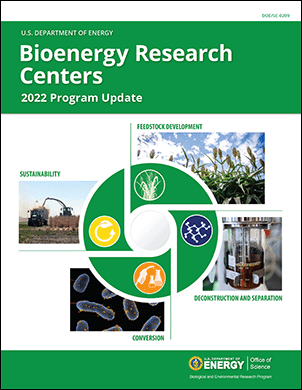
Four Bioenergy Research Centers—each led by a DOE national laboratory or top university—take distinctive approaches to the common goal of improving and scaling up advanced biofuel and bioproduct production processes.
The multidisciplinary teams are tackling fundamental science challenges in:
- Sustainability
- Feedstock development
- Deconstruction and separation
- Conversion
Their research is identifying the genomic underpinnings of complex plant traits in promising bioenergy crops and streamlining deconstruction processes to funnel plant components into defined process streams. The centers are designing new pathways in microbes to convert plant biomass to a range of fuels, chemicals, and bioproducts. They also are developing the agronomic understanding needed to sustainably manage and produce bioenergy crops on marginal lands.
Select BRC Highlights
First demonstration of targeted gene editing in the bioenergy grass Miscanthus
Engineered auxotrophic Agrobacterium strains improve plant transformation

Strong climate mitigation potential of switchgrass grown on marginal lands

Yeast engineered to produce triacetic acid lactone from sorghum